Friday, October 02, 2009

Comfortably numb


All About Lily Chou Chou is a study on contemporary Japanese youth culture, an attempt at examining the situation that has led to some Japanese teens becoming violent and despondent, an outcome which has bewildered the older generations since the Japanese economic bubble burst back in the early 1990s.

Centred around a young teen named Yuichi, the film deals with bullying, shoplifting, prostitution, suicide, rape and murder, and how he and his school mates submerge themselves into their culture to escape their grim realities - in this case an obsession with the titular pop star, Lily Chou Chou.


Rather than just being a gritty expose of modern Japanese youth, the film is often lyrical to the point of being willfully abstract, with the long opening scenes consisting of little more than Yuichi standing in a rice field listening to a discman, whilst text from the fansite he runs dedicated to Lily flashes on screen, as different fans discuss Lily's music and the idea that it taps into an alternate state of being, known as the "Ether".

The films is shot on handheld DV throughout, most obviously in a long sequence following Yuichi and his school friends on holiday on a southern island in Okinawa, which is shot in POV of the boys’ own hand-held cameras.
These scenes are a welcome escape from the school and home life of the characters, but as the sequence plays out it’s obvious that getting away doesn’t help the boys get away from themselves.


The cruelty that adolescents are capable of inflicting on each other is always disturbing, and the situations here ring true as similar incidents are a regular occurrence in the news, but the film's attempt at elevating the kitchen-sink subject matter with an arthouse eye doesn't entirely succeed, instead serving to highlight the insular thought processes of the kids and thereby making them less sympathetic. The concentration on the look of the film brings the audience away from the characters and results in you investing less into what happens to them, leaving you to passively absorb the injustices rather than be pricked into anger or sorrow. The essential core to the story is that one of the bullied becomes the bully, and is even worse than those that came before – it’s a situation that should evoke feelings of bitter irony but the isolation of the characters, whilst on the one hand doing a good job of conveying the numbness they impose on themselves to cope, results in the audience feeling a similarly subdued reaction.


The performances are all decent but some of the characters are less than well rounded, particularly the bullies, and this lends the atmosphere a more exaggerated cartoony feel that only detract from the more artistic directional aims.

Extras are confined to a trailer for the film and trailers for other ICA DVD releases.


It's not a bad film but the subject matter has been handled often within Japanese cinema and more imaginatively, and although shot two years before Gus Van Sant's Elephant it still manages to feel like a cheap copy.

Labels: , ,

Sunday, September 20, 2009

The flavour of the weak

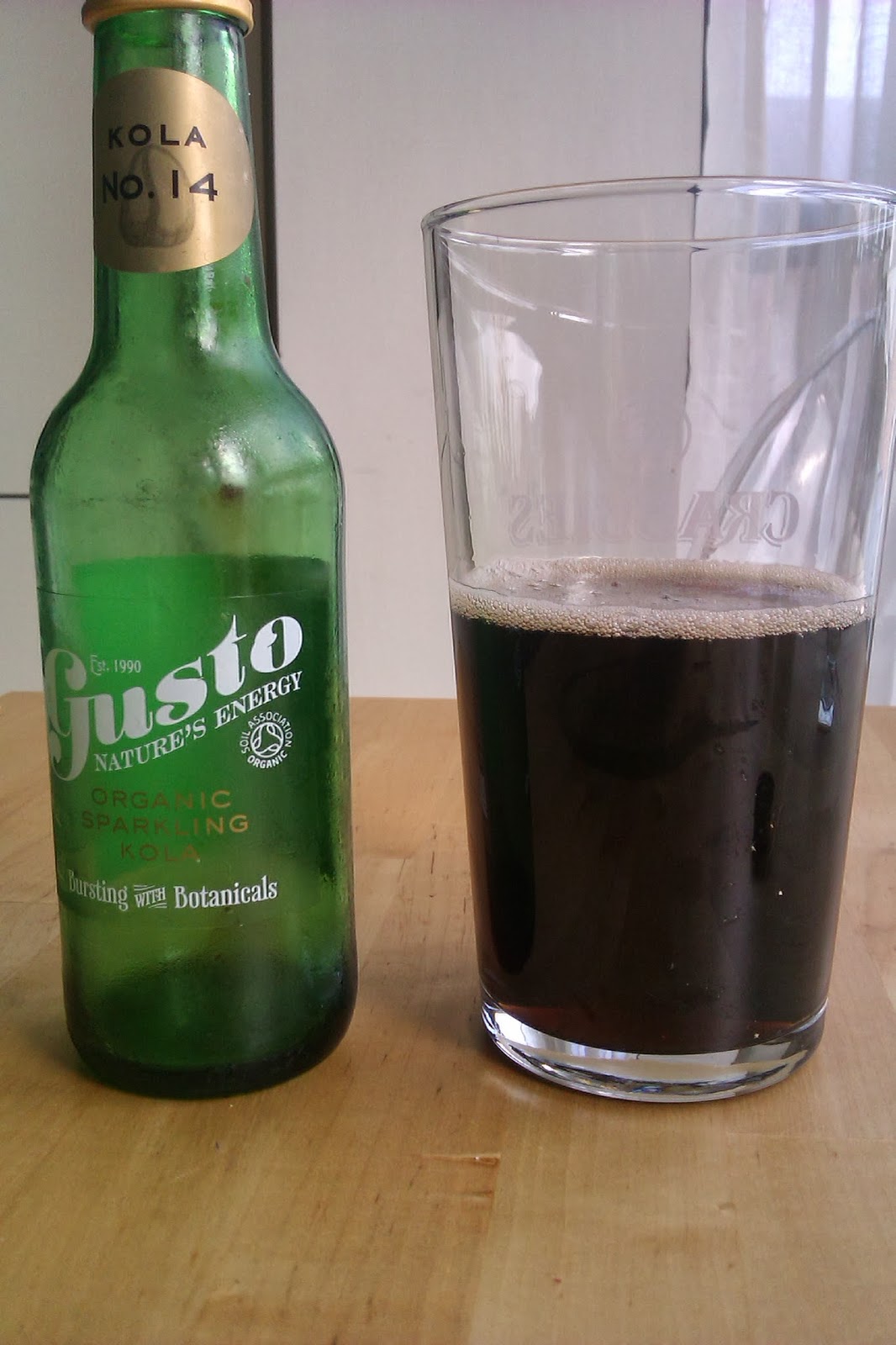
It’s time for yet another fizzy dip.


Spar, the convenience store chain that have apparently been the official sponsor of ‘European athletics’ since 1996, have their own branded cola range. It seems that their marketing people decided that the nationality of the cola is what entices the consumer, hence their decision to go with “american diet cola” – “real american style, real american taste.”
It’s confusing enough that the label seems to call it american cola diet, but the instance of lower case for american is nearly as confusing as the idea that a cola is able to taste American. They even have a little logo on the bottle with a smidge of what looks like a New York skyline, proclaiming “Authentic American Taste” (this part is all capitals but I’m not going to replicate that here unless absolutely necessary).
They might have a point if the recipe wasn’t all chemicals, but the ingredients are the same as most colas. It does say in the blurb that it’s produced in the UK form cola flavourings imported from the USA. Because we don’t have taste labs in the UK, obviously.
Anyway, their heart’s obviously in roughly the right place as they care enough to include the adult GDAs for calories and salt and such, despite the fact that the levels in the drink are all ‘trace’.


On pouring the drink is fizzy, building a good head that lasts a fair few seconds, and leaving a good numbers of bubbles around the perimeter of the glass for a few minutes after the pour. The smell isn’t strong, giving a faint hint of cola bottle sweets. The taste is also faint, barely registering to the point that you could be forgiven for thinking it was slightly flavoured carbonated water; holding a mouthful before swallowing in an attempt to maximise the flavour makes little difference, if I didn’t already know I was drinking a cola I think it’s possible that I wouldn’t be able to identify what it was, besides it being sweet and not fruity.
In the grand scheme of things it’s hard to decide which is more important – for the cola to have a strong flavour or for that flavour not to be foul, but ultimately if you’re so very close to drinking water the only difference here is the added caffeine. Stereotypically the USA isn’t renowned for it’s subtlety, so attempting to sell this on the back of its american-ness isn’t going to do it any favours.


Spar do a vanilla flavoured version of their cola, though unfortunately only in the sugared variety.
Like the diet, this cola has only a faint whiff once you open the bottle, the vanilla is definitely present but there’s a lot less fizz on the initial pour.
First impressions? These are not the droids you are looking for. Taking a good nosefull at the edge of the glass brings in the kind of vanilla smell that you get with a vanilla coke with vodka, except that the mix has been poured in favour of the vodka leaving the acrid, poison smell of the alcohol tainting the bouquet. Hardly a good start. The first gulp fares no better; the vanilla taste is there, but in an oppressive way, coating the roof of your mouth. It is the vanilla of ice cream, but not some rich Devonshire vanilla ice cream, no, instead it has the taste of the cheapest most synthetic vanilla ice cream you could imagine – the panda cola of vanilla ice cream.


After the first couple of gulps the smell doesn’t lessen; that bitter warning remains suffused within it – “stay away, stay away”. And the taste continues to coat the roof of the mouth, barely lighting upon the tongue as if it works along the lines of a strange, reversed gravity.
It seems more and more likely that this cola was brewed using some dark magic.
Safe to say I’ve not found my diet vanilla Coke substitute in this offering.


As cola variations dwindle I have to diversify. To this end, bring on Idris drink company’s Fiery ginger beer. “Try me if you dare!!” The double exclamation marks clearly point to a beverage even more extreme than Pepsi MAX. Imagine!
Who Idris are I don’t know as it clearly states on the back that Britvic makes the drink. It uses ginger root extract, but is it fierier than other ginger beers? Not being a ginger beer connoisseur I have no idea, but I can at least see if it’s fiery.
So, fizzy on pouring but no head, the odour isn’t immediately noticeable on cracking the can, and the colouring is that of cloudy lemonade. A whiff from the glass brings a hint of ginger, but also a lot of lemon as you may expect what with citric acid being a main ingredient. And what does it taste like? Sweet lemon with a very slight ginger kick that mainly takes effect at the back of throat, lingering long after the swallow and threatening to build like hot spices, but never doing so, in a similar manner to the many moments of tension building in the film The Orphanage that see no release. Is it right to use Spanish cinema references in soft drink articles?
Yes.
If you buy Fiery ginger beer in an attempt to cement your Extreme reputation then you’re likely to be disappointed, I wouldn’t say that I’m particularly resistant to spice and I find this particularly weak.


So, what’s Cherry Diet Coke like? One of Coke’s more enduring flavour experiments, Cherry Coke has been around since 1982, according to Wiki, with the diet variant around since 1986. Cherry happily seems the perfect fruity fit for Coke as it’s sweet enough not to be drowned out and yet retains its particular flavour in the mix.
Pouring acts like Coke, unsurprisingly, producing a fair amount of fizz and an average head before settling down. The smell hits straight away, though, even though the can was cracked a foot away – that unmistakeable, artificial ‘Cherry Drop” twang.
At the lip of the glass the smell is there, and for a fan of cherry-flavoured boiled sweets it’s tantalising. Nothing is given away in the ingredients to hint at where the origin of this nasal sensation is born, but the catch-all term “flavourings” no doubt masks the very same parentage as that of Basset’s Cherry Drops (Wiki search, no I don’t mean “Baroness Cherry Drums”).


And the taste? More fruity than Cokey, though the punch of the cherry is disappointingly subdued compared to the smell that this brown ooze gives off. There’s also a bit of that coating feeling that you rarely get with diet fizzy pop, particularly clinging to the tongue like a second skin. Definitely more viscous than standard Diet Coke, which dribbles down a lot more closely to standard tap water, it’s probably that mysterious chemical that does it.
Not unpleasant then, and a welcome alternative to your common or garden Diet Coke, but definitely not a vanilla beater.
Still, even if Coca Cola are unlikely to win any ethical awards any time soon they can at least bask in the pride of producing one of the most belch-worthy beverages on the shelves. Most gaseous.


Not being a man’s man, I hate ale and beer and this dislike extends to anything sharing the moniker, meaning I tar ginger beer and root beer with the same brush. Whereas the Fiery ginger beer tempted me with a promise of a challenge, root beer I have been recently informed, usually contains some amount of vanilla and so is now naturally tempting.
The Bundaberg Australian Root Beer bottle has an old school beer theme to it, the style of labelling, font, brown glass and the way the kangaroo image is used with the lightburst behind it all conjure a certain association, perhaps making this the tipple for kids to drink so that they feel like grown ups? The liquid isn’t very bubbly and the odour isn’t strong enough to carry; the colouring is very similar to cola and ultimately belongs to the same family of beverages that at one time would have been branded as tonics rather than alternatives to water. Even at the rim of the glass the odour is weak, and reminds me of the mouthwash that they use at the dentists to give you a rinse. It tastes like that to, and is a little thick, definitely leaving a bit of a sweet coating on the back of the tongue as if the sugar decided to hang back after the liquid had made its way to your epiglottis. Definitely not a taste I could get used to as the medicinal quality is never outdone by the sugar, no matter how natural the ingredients or the brewing process are supposed to be. I can detect the liquorice and the vanilla bean to some extent, but not the ginger and I’ve no idea what sarsaparilla or molasses are meant to taste like. Not something to revisit.


My tastes have certainly come a long way in the last decade or so, on from the time when I would refuse vegetables or foods with sauces (which are legion), but this small and unadventurous taste exploration into the world of the pre-prepared Western soft drink proves that I am still quite limited.

Labels: ,

Monday, September 14, 2009

Doctor, look out!


I’ve never been much of a radio listener, so when I hear adverts on the commercial stations the form of the audio-only advert always strikes me – the techniques involved; the different methods used in the absence of visual aids. One advert that I noticed while staying with family recently (one of the few situations where I actually listen to radio, as opposed to podcasts) was on Kiss FM, and was a government sponsored anti-drug ad targeted at the mostly young Kiss audience. An actor played out a situation where they smoke a spliff, become paranoid and then get violent. I was reading a paper at the time and the radio was little more than background noise to me at that point, but once I focused on the ad I couldn’t help but release an audible exclamation. I’m sure that situations where cannabis users get paranoid exist, and a proportion of these may lead to extreme or even violent behaviour, but the idea that they were trying to promote this as likelihood rather than outside possibility incensed me.
I never enjoyed smoking cannabis back when I was a teen, though did sometimes enjoy the sensations that resulted, and I haven’t smoked or otherwise taken any in likely twelve years, but I can’t stand the hypocrisy that is flopped out time and time again when dealing with cannabis as opposed to the treatment given to alcohol. True, the government never condones binge drinking and the like, but you don’t need to binge to get a much higher proportion of people having reactions to alcohol that are far worse than those to smoking gear.
This is the TV version of the advert:


Despite the recent surfeit of blokey comedies in recent years, many of which are connected to the Apatow stable (who surprisingly has only directed three films to date but seems connected to dozens), it’s the Hangover that seems to be the enduring hit in the UK and is still screening in 21 screens as of September 12th despite having been released on June 12th, I’d be surprised if Mamma Mia had lasted much longer.
For a ‘bad taste’ comedy which not long ago would have invited comparisons with the films of the Farrelly brothers, the Hangover is pretty so-so with only a handful of belly laughs to be found in the overly familiar situation of people going to Vegas, over indulging and then engaging in a spot of OMG!!11! as they try to piece together the previous night. Perhaps the Great British public find the situations involving binge drinking comfortably familiar.


Unfortunately I’m no stranger to the concept of the lost night. A number of times I’ve found myself regaining consciousness the morning after and having no memory of what happened after a certain point. Regaining consciousness is not the most accurate way of putting it, as this implies passing out rather than blacking out, which is the phenomenon that I experience – a complete lack of knowledge of what I did or said, and then suddenly I’m back. A lot of the time it has to be said that it involved situations where a free bar led to me not keeping track of how much I’d had, or drinking at home or at parties meant that self-poured drinks contained undefined measures, but many is the time that I have eaten three meals, slept relatively well and only had 5 or so drinks before suddenly finding myself somewhere else at a later time. One study (GOODWIN, D.W; CRANE, J.B.; AND GUZE, S.B. Alcoholic "blackouts": A review and clinical study of 100 alcoholics. American Journal of Psychiatry 126:191-198, 1969) suggests that it is the concentration of alcohol in the blood that leads to blackouts, which is supported by the self-mixed and free-drink instances, although it would be interesting (and useful) to discover what variables resulted in blackouts in the cases where I consumed far less quantities and in seemingly ‘safer’ circumstances.


Some sort of homing instinct seems to get me back every time, though most recently I vaguely recall not being able to get into my flat and taking apart my wallet chain in order to try and pick the lock. I sat in my front doorway until half three in the morning when I remembered that my keys were in my back pocket.
I had been to a gig that night but do not remember a second of it; two CDs and a t-shirt testify to my presence there, and perhaps that I enjoyed it?
It’s not a happy time, as though I rarely get up to anything that I would be ashamed or embarrassed of in the cold light of day, it is uncomfortable to think of myself not in control of my actions. Am I really getting on with it, but much more drunkenly than usual, while the alcohol destroys the brain cells that record the memory of events? Or does another part of my consciousness take over while I am out of action – if so who is this version of me and where is he when I’m sober? More likely, but no more comforting, is the idea that excessive drinking leads to a form of anterograde amnesia – a state whereby you are unable to retain information so that you can still utilise skills you have learnt and can remember things before the amnesia took hold (usually due to brain injury), but anything that you experience afterwards is lost to your long term memory (most famously the basis for Christopher Nolan’s Memento).
Obviously in the case of binge drinking the effects are only temporary, with the ability to retain experience returning after the alcoholic influence subsides, but the idea that you can lose memory so utterly is disquieting.
Memory is ultimately the backbone of your very personality, formed as you are from the experiences and interpersonal exchanges that you build up over time – without these the ‘you’ that you take for granted when performing even the most cursory self reference as you look in the mirror in the morning would simply cease to be. You can lose snatches of it and still retain your essential self; but lose the lot and you are dead in mind if not in body. I find the physical connection between brain tissue and memory, and therefore the physical body and consciousness, to be the strongest argument against the popular idea of the immortal soul or reincarnation. Should the soul exist, it very well may ‘live’ on after your body dies, but once your brain is gone your consciousness goes with it – the ‘you’ that is reading and processing these words right now will cease to exist, which kind of makes the idea that you will meet your loved ones in heaven impossible – if brain damage can potentially destroy any memory you had of a husband or wife and a decades-long marriage, there’s no hope of retaining that information beyond the flesh and into the ethereal.

Labels: , ,

Monday, September 07, 2009

Arm me with harmony

My hunt for soft drinks continues.
Resigning myself to the fact that there is no adequate vanilla cola substitute out there, I still find myself as a night person with a normal nine to five job. This means a certain amount of sleep deprivation that can only be controlled by liberal ingestion of caffeine. As I’m not a proper grown up I don’t drink tea or coffee and so have to rely on fizzy pop alternatives. Red Bull is the obvious choice, its 250ml cans packing the punch of two filter coffees, but this concentration is sometimes a bit much so the next best thing is the 330ml cans of coke and the like, which carry about the same as a cup of tea.
There aren’t that many soft drinks besides cola that actually contain caffeine, and being a drippy ethical sort I’m not comfortable with blissfully quaffing away at the products of the Coke and Pepsico mega corps who aren’t exactly squeaky clean.


The A.G. Barr soft drink company has apparently been around since 1875, is based in Scotland and is arguably most famous for Irn Bru. Irn Bru and Coke regularly fight over the top spot as Scotland's soft drink of choice, but as far as I can tell Barr don’t indulge in any overtly unethical business practises, you know, like condoning the murder of trade unionists.
Thus I was simultaneously pleased to find that I had a taste for that bright orange brew made from girders, and dismayed that the diet variety is pretty hard to come by round these parts. Two litre bottles are found in the odd supermarket but aren’t ideal for a desk-based drink at work, and so far I’ve only found cans in my local shop over the road. For a medium sized cornershop their selection is pretty comprehensive, and not only do they have the cheapest vanilla Stolichnya I’ve seen but also a fairly wide variety of Barr’s other products.


Barr Cola seemed an obvious choice; where would it sit in the cola pantheon?
The smell hits you as soon as the brew pours into the glass – the cola qualities are all there and not dissimilar from Coke itself. A sniff taken from the rim of the glass gives more of a hint of that cola bottle, chewy sweet scent, though. The froth builds quickly and rides high once the liquid hits the glass, but it’s very short lived and soon settles down to a mostly calm, slightly bubbling state.
It’s a very odd taste sensation. Despite being a full-sugar version, it’s not especially cloying, but somehow there is no taste in the meat of the gulp. It is almost as if you are drinking water with a cola lining, the taste seems to be contained in only the outermost edges of the liquid mass that you decant into your maw. The lack of that cloying feel is echoed in the viscosity; Barr’s Cola slips down very easily (probably due to the aforementioned lack of density in carbonation).
Whilst not particularly tasty, this could become a regular alternative to Coke, but unfortunately it doesn’t seem to be available in a sugar-free variety so is no good to me.


Then there’s Ka, the ‘sparkling Karibbean Kola flavoured drink’. That label design doesn’t exactly inspire me with confidence.
A lot less fizz than Barr’s simply titled Cola on the initial pour, but it settles in the same way moments later. The smell isn’t as obvious on twisting open the bottle, but at the rim of the glass its bouquet betrays a definite citrus element. There’s fruit in there somewhere.
It just tastes weird. Not very cola-like at all, the fruit seems like some hybrid mix of berry and melon. Is this really “A Taste of the Caribbean”? As with the Barr Cola it only seems to be available in a sugared variety, but like Barr Cola it also is not cloying and slips down smoothly. Again it’s quite a pleasant little concoction but my tooth rot fear precludes me from making it my drink of choice. Besides that, caffeine is not even listed as ingredient, so it becomes even more redundant for me. Still, it’s not the hideous Panda cola-esque abomination that the packaging design might have you believe.


As for Irn Bru itself? Just like the other Barr drinks, the fizz settles down early on, leaving a few bubbles to make for the surface, but on taking a sip you find that there is still a fair amount of fizz present. Whilst it still goes down as smooth as Ka and Barr’s Cola, a lot of gulping in quick succession is going to leave you in danger of rather plosive belching.
The odour has a pleasant fruitiness to it, echoed in the taste that has a definite citrus tang, leaning heavily toward oranges. It makes for a much lighter and refreshing alternative to Red Bull, which seems deeply entrenched within its artificial nature. At least Irn Bru has the good grace to disguise this.
Whilst neither of the Barr colas had ingredients out of the ordinary, Irn Bru does have one thing as a point of difference – ammonium ferric citrate (0,002%), which is presumably where the Irn comes from. Essentially the compound serves as an acidity regulator, so it would be interesting to know if this is an industry standard or serves to add to Irn Bru’s uniqueness. Presumably the standard ‘acidity regulator’ description would be used if the actual type was unimportant?


It’s interesting how certain urban myths are perpetrated and why. Was the MMR jab scare of a couple of years ago down to a slow news week or was there another agenda at stake? The vilification of sweeteners used in some soft drinks is another unsubstantiated rumour that is now taken as read in the same way that most people believe that the Godzilla remake is rubbish even if they’ve not seen it (and I am one of that number).
The article linked below aims to look at how you can dig deeper into the background of a website to try and ascertain its worth as a source, and it just so happens to cover one of the stories that spread about the artificial sweetener Aspartame. It has been cited as the cause for any number of conditions, but as yet none of these have been backed by any sort of scientific research or evidence, and yet it remains one of those common misconceptions – that diet soft drinks are bad for you; the sweeteners cause brain tumours; they can cause cancer; carbonated drinks rot tooth enamel.
Caffeine is about the only exception that has documented effects on health, and yet those who cry foul on diet sodas are likely to be coffee or tea drinkers themselves.

Are soft drinks evil?

Labels: , , ,

Saturday, August 22, 2009

I am fail


I've always wanted to be a writer (after muppeteer), but since my late teens I've felt that my imagination had dried up and died, and I had no stories to tell. This lack of ability for fiction didn't stop me wanting to get into criticism, particularly of film, but with a lack of effort on my part and a very limited opportunity to make a living it will take a massive amount of will power to take that road.
In the meantime, as I ambled along with a bit of criticism thrown out here and there on various websites and my own blog, I was introduced to the idea of the 'drabble' by friends. Essentially an exercise in focus and restraint, it is a short story contained within exactly one hundred words and it seems like an ideal format to try and come up with and use ideas without being daunted by the idea of a novel or even a short story. Unfortunately it's a lot harder to fit ideas into one hundred words coherently, and the below is an example of overspill.

-

Of course it was ironic. She couldn't envisage actually telling people
about this, assuming that she even survived.
After years of panic and worry due to her phobia of air travel, Sally had given in to her desire to see new cultures and more of the world. Trains and coaches across Europe and Western Russia, and the brief visits to Northern Africa via ferries across the Med had only exacerbated her desire for adventure, rather than extinguishing it.
Three weeks ago she boarded a frieght vessel at Southampton, thanks to months of wrangling and a sympathetic captain who had a pteromechanophobic wife. They set off along the West coast of Africa, rounded Cape Agulhas and made their way across the Indian Ocean en route to Bangladesh. Sea travel agreed with her, the rythmic lurching of the vessel and the salty whip of the air raised her spirits; she looked forward to seeing India, the Far East and on into the Pacific.
It wasn't pirates that did for them in the end. The ship had been old and rickety,
and whilst this had added to the charm of the voyage in her eyes, the tornadoes that hit were the worst in three decades, and the ship broke up before the night was out.
She didn't remember how she came to leave the ship, whether she made one of the life boats or hit the water, when she fell unconscious. All she knew was the here and now - the bright, cloudless sky, the small island of rock and sand, so tiny she could see the entire perimeter from where she sat.
The boxes washed up from the ship, damp not just from the sea but from the slow melt of their contents. Part of the cargo had been a large number of pudding items from one of the UK's premium luxury food producers, kept frozen on board and destined for the tables of India's burgeoning upper middle class.
A dessert island.

Labels:

Friday, July 03, 2009

Mr. Funny Shoes


In the run up to the August 2007 release of Bioshock the game and its developers received a large amount of positive press, highlighting not only a new direction for the now mainstream First Person Shooter, but also a game that was seemingly steeped in ideas regardless of gaming genre.
The setting itself was a breath of air as fresh to the FPS as it would be stale and salty within Rapture itself. Whilst to this day many stable mates don't dare to venture beyond the well-trodden path of the space marine (see Gears of War, Fracture etc.) or WW2 soldier, the idea of an underwater utopia based on the principles of free markets and the stimulation of art and science is a large departure in and of itself, let alone envisioning this fleetingly proud city sliding into corruption and decay, and resulting in a mini eco-system consisting of psychopathic gene-altering survivors, sinister little girls who harvest corpses for valuable genetic-altering material (Adam) and their protectors, the hulking, diving-suited Big Daddies.

The aesthetic choice of the setting is interesting as it is firmly rooted in the ‘Golden Age’ of 1950s Americana, possibly the one period in which the US could lay claim to its own unique cultural stylings as in the centuries before World War 2, fashion, architecture and so on were heavily influenced by the myriad cultures that emigrated there, whilst from the 60s onward North American culture became more and more pervasive globally, leading to an inevitable dip in individuality as it became ever more ubiquitous. It is likely not a coincidence that one of the more aesthetically striking games in the short time since Bioshock achieved critical and commercial acclaim is Fallout 3, set in a post-apocalyptic 1950’s influenced America.
To be fair much of the architecture in Rapture itself is based on earlier movements, but the atmosphere of the 50s in terms of behaviour and dress is undeniable.


Aside from the visual stylings, the influence of Ayn Rand and Objectivism is central to the conceit of Bioshock’s world, and explicit in the naming of Rapture’s founder Andrew Ryan, whilst the setting is ripped straight from Atlas Shrugged with a character named Atlas supposedly leading the resistance against Ryan’s rule and Rapture itself peopled with ‘great minds’ invited by Ryan to a retreat beneath the ocean (rather than into the mountains of the novel). Laissez-faire capitalism is implicitly blamed as the root of the breakdown of the fledgling society as no one oversees the rampant research into gene technology or stops the populace from abusing it before possible consequences are understood. Objectivism is echoed in the ideas of freedom of choice and action and character progression within a scripted medium - is the man asking 'would you kindly?' and giving you the illusion of choice similar to the game programmer giving, via interaction, the illusion of choice that the audience does not get from more passive mediums such as film, music and literature?

After the integral philosophical and cultural influences on the game (the fact that it had any was a cause for celebration in itself), much was made of the moral choices that would be presented to the player on arrival within Rapture. Essentially this boiled down to your choice of whether to "harvest" (read: murder) the little sisters for their Adam, or save them from their apparently benign co-existent relationship with the Big Daddies. You could usually decide to opt for neither and leave them to their own devices as they wandered the sub-aquatic halls, but both options resulted in rewards to power up your plasmids (gene-alterations that work in the same way as magic, basically).


On reading all of the preview articles, I got an impression that the idea of freedom of choice was rather more free than it actually turned out – on my first encounter with a (gene) splicer, bent over a baby carriage and sobbing, I thought that I might have the opportunity to talk with the character, to perhaps try and appeal to reason rather than violence. But the choice not to fight is never an option (unsurprisingly as your avatar sticks to the usual FPS convention of being mute).
The chance to decide whether to be 'good' or 'bad' has long been present in RPGs, with varying degrees of subtlety, and has been extant on console iterations of the genre for years, with the most widely-known examples being in the two Star Wars: Knights of the Old Republic games and in the first Fable on the Xbox.
Being presented as the 'crucial' moral choice of harvesting in Bioshock rather overstated the matter, especially as the consequences of being the good guy and foregoing the power ups gained through murder were rather mitigated by getting gifts of power ups for being so gosh darned nice.

Regardless of the promises unfulfilled, Bioshock remains one of the high points in the evolution of the FPS since it began around seventeen years ago, standing alongside such greats as the Half Life series, mainly down to the attention to detail in creating an immersive world within which the well-honed point and shoot game mechanics could be enjoyed.
It will be interesting to see where they go with Bioshock 2 now that the ‘shock twist’ or Rapture’s story has been used and similar limited quandaries about freedom of choice and morality ultimately won’t have the same impact second time around. Making you the prototype Big Daddy smacks of the usual trend for sequels to have more and bigger bangs, but even if the new iteration follows the usual sequel formula it will still be refreshing to revisit Rapture after so many urban warzones, Normandy landings and bug hunts.

Labels: ,

Saturday, May 30, 2009

A real boy


Released by Manga Entertainment to capitalise on the theatrical distribution of Casshern (the live action version of the story), Casshan is a remake of the 1973 TV series of the same name, which was created in the first place to replace the hugely popular Science Ninja Team Gatchaman (a.k.a. Battle of the Planets).
The similarities are noticeable in the design of Casshan’s helmet, as well as his robot dog that also handily transforms into some sort of jet.


Though released much later than Manga’s initial flurry of self-consciously ‘adult’ releases of the early nineties (it was released in the UK on October 31st, 2005), Casshan very much fits in with the sketchy quality of those titles.
Featuring a dated art style, re-use of animation sequences (common in TV productions) and fairly generic enemy design, with robots having a biomechanical appearance similar to the enemies seen in everything from Blue Gender to Beet the Vandal Buster, Casshan is guilty of numerous anime stereotypes; there is even the obligatory shower scene for the female character. Whilst many 80s horror films utilise the shower scene in order to promise a little nudity and appeal to the target male adolescent audience further, at least the exploitation is in keeping with the theme of the films – the woman is rendered even more vulnerable when naked to whichever nasty is offing people in the film. In anime, however, the shower scene rarely benefits from even a hint of context (Vampire Hunter D is an example that springs to mind).


So far, so-so. The plot involves robots taking over and at war with the humans, Casshan being humanity’s last hope as he is able to take the robots one-on-one. You’ve got a recurring anime theme of the protagonist being created or having a companion created for them by their usually absent, genius scientist of a father – in this case the father Dr. Azuma is responsible for creating the android leader of the robot army, as well as the suit with which his son Tetsuya melds himself to become Casshan (in a scene echoing that of Cronenberg’s Fly transporter).
As Casshan is now an android, we have scenes that briefly touch on what it means to be human, particularly as Tetsuya’s old girlfriend (she of the human resistance and random shower scene) insists that he still has a human spirit. This is an idea that crops up regularly in anime, particularly in Ghost In the Shell but originally in Osamu Tezuka’s Astroboy, where Astroboy is created by Dr. Tenma to replace his son Tobio who was killed in a car crash. Tezuka (often dubbed the godfather of anime) was in turn inspired by the 1883 story of Pinocchio, where Geppetto is the character who would become the mad scientist in Shelley’s Frankenstein and then reappear over and over again within the sci-fi genre.


The standard military fatigues of the soldiers emphasise the ridiculous costume that Casshan's love interest wears.


Fascist imagery crops up throughout, from kaiser-style pointy helmets to this Nuremberg rally scene.

Despite Casshan’s mediocrity, it is worth a watch if only for the commentary by Jonathan Clements, co-author of the anime encyclopaedia and a man who knows his stuff. Not only does he touch on the themes I previously mentioned, but he sets the context of the original story – not just the desire for a Gatchaman replacement but the social and political context of an early 70s Japan. Internally the country was experiencing the terrorist attacks of the Red Army who sought to overthrow the political conventions in society, in much the same way as the Baader Meinhoff Group in Germany and the Weather Underground in the US. Externally the Cold War was at a peak but Japan was left without the benefit of identifying with either super power involved in the threat of nuclear apocalypse.
As well as this he sets the scene for the creators of the remake – not just the practical limitations of a production for TV before digital animation became widespread, but the wider circumstances of the early 90s, which led to scenes influenced by the Gulf war and the Japanese economic collapse.
Whilst the commentary doesn’t improve the anime itself, it makes for much more interesting viewing and helps give further grounding in the history of anime itself – any Clements commentary is worth a listen and it is genuinely worthwhile seeking out the Manga releases on which his commentary tracks feature, regardless of the quality of the particular title.


The use of Christian imagery for aesthetic purposes in early 90s anime (see Judge and more famously, Neon Genesis Evangelion) is touched on by Clements.

Labels: , , ,

Saturday, May 16, 2009

The hand that feeds


To start with, a refresher into my cola coverage to which this handy link will direct you:
http://oneinchlunch.blogspot.com/search?q=vanilla+coke

My search for a Vanilla Diet Coke alternative has been fruitless, but it has led to a mini soft drink adventure, the latest leg of which is now before your very eyes.


Fentiman’s botanically brewed Traditional Curiosity Cola smells like cola bottle sweets, and the initial taste is the similar but with a hint of the plant extracts that have been used – there is definitely a faint ginger hint. Oddly, after this first hit the liquid is curiously tasteless. It is a clean brew, however, going down easily and leaving no unpleasant aftertaste. There’s nothing wrong with it at all, but there just isn’t enough there to inspire any overwhelming affection. This cola is not excessively fizzy, but there’s enough of a kick to provide at least one satisfactory belch.


Ingredients are listed as: “Fermented ginger root extract, carbonated water, sugar, catuaba extract, gurana extract, caramel (E150), phosphoric acid (E338), cola flavour 9594 (flavouring), caffeine.”
I’ve encountered these before, apart from catuaba, which is a bark extract that according to Wiki is used in aphrodisiacs and remedies for erectile dysfunction…I’ve been unable to find any mention of flavouring 9594 so far.
Most interesting is the label stating that it contains “not more than 0.5% alcohol by vol.”, which makes me wonder if it’s flagged as an alcoholic beverage to retailers (as it tends to be stocked with soft drinks) and what the legality is of selling this concentration of alcohol to under 18s…


The bottle itself is a satisfying product, evoking the old-school charm of the era that calling something a ‘curiosity cola’ tries to conjure up.


Not entirely sure why there is a Star of David on the underside of the cap.

Still, the presentation is subservient to the taste, and as the taste is very minor in the grand scheme of cola I doubt I’ll be returning to Fentiman’s, particularly as it only comes in a sugared variety and my dentists are becoming progressively unreliable, so I’d like to avoid any visits beyond periodic check-ups.

Having said that, I’m prepared to take the risk this once in order to continue the cola investigation, toothpaste and mouthwash are not far away.
For the sake of detail fetishists I am rinsing the glass thoroughly in between to prevent taste contamination.


The can is so busy it is hard to work out what this is meant to be called, so we’ll go for Whole Earth Sparkling Delicious Cola.
The line below this is “Drink made with a dash of organic lemon!”, which surely should be preceded by “A”, otherwise the name is ridiculously long.
The front of the can also has “Nutty cola nut” with an arrow pointing to the top of the can, and “Whole Earth organic drinks are 100% delicious” and “And mase with bubble-licious sparking H20!” situated either side of the Whole Earth logo.
The initial impression is one of design by committee, too many cooks as it were, the can front being so cluttered it almost seems like a prototype design with all of the product features displayed at once accidentally made it to production, with so many cans manufactured that it was prohibitively expensive to scrap them.
In comparison to the back, however it seems sparse, with all the information barely squeezing in the available space.
To be fair, the ingredients are presented in four languages, which at least explains the abundance of text.
“Sparkling water, organic agave syrup, organic lemon juice from concentrate (2%), barley malt extract, natural flavouring, cola nut extract. Contains barley and gluten.”


"Natural flavouring" is clearly not descriptive enough, but we can only assume that it doesn’t represent a health concern. Cola nut contains caffeine, which itself is a flavouring, so it could be referring to caffeine. Agave syrup comes from the agave plants native to Mexico and are used as an alternative to sugar in cooking, so that’s the sugar substitute.


After the first pour it seems that the Whole Earth has a good deal more carbonation, but on introducing the nose over the lip of the glass it is an effort to try and draw forth an odour from the drink. There is a very slight fruitiness, more cherry than citric despite the mention of lemon on the front, but as I said this smell is hard to come by.
The taste itself is very bizarre, a fruit flavoured cola with massive emphasis on the fruit, and yet not like any fruit you have tasted.
The lemon is definitely there, and there is a syrupiness that you associate with colas, although the traditional cola taste is barely evident. It’s almost like a carbonated fruit drink for people who don’t like fruit and like their drinks brown. And organic. And Vegan. And not very carbonated, despite how it looked after the first pour.


What with the Whole Earth cola being so right-on and Fentiman’s being ‘botanically brewed’, it’s not a huge surprise to find one of the major players catching up to the bandwagon, with the introduction to the market of Pepsi Raw.


Whilst not as aesthetically pleasant as the Fentiman’s bottle, Pepsi’s Raw bottle is nicely streamlined with wibbly lines around its lower half. It’s a shame that the labelling is literally that, a clear label rather than something etched or blown into the glass itself, but I imagine that the ingredient details would be hard to produce en masse via etching. Going for the pop-top rather than the screw-on of the Fentiman’s, it’s heartening to see the Pepsi logo is off-centre – an unfortunate accident or a design decision in order to fir with the ‘organic’ nature of Raw?


The pour gives an impressive head, threatening to escape the confines of the hiball, but the odour is an unpleasant extremely earthy smell, very much reminiscent of the Red Bull Cola aftertaste. That same aftertaste is there in the Raw, too, the bitter earthiness is present in the sip but comes out more strongly after the swallow, and there don’t seem to be any other flavours to offset this. The kola nut is said to be bitter and that is certainly evident here, the cane sugar and caramel flavouring only offering weaker support tones to the acrid and musty kola nut taste, with a hint of the bitterness of coffee beans.


In contrast to the Whole Earth can, the Raw bottle is clean and simple in design, with the text white on the clear glass and taking up little of the bottle surface. It would have been good if they had left the RDA indicator (sugars: 28.8g or 32% of an adult’s daily maximum) round the back, but quite a lot of room is taken up with the barcode.
The ingredients list reveals “Sparkling water, cane sugar, apple extract, colour: plain caramel, natural plant extracts (including natural caffeine and kola nut extract), citric, tartaric and lactic acids, stabiliser: gum arabic and thickener: xanthan gum.”
The apple extract comes as a surprise as it’s very hard to detect, but on reading the Times article about the drinks launch (apparently UK only to begin with): http://www.timesonline.co.uk/tol/life_and_style/food_and_drink/article3353735.ece
we find that coffee leaf is one of the ingredients, so presumably the source of the “natural caffeine”, which helps explain the final taste.
The Times reports that with the introduction of Raw, Pepsi hopes to gain ground over Coke, and that they have not introduced any new drinks for ten years. The Times isn’t clear whether it is talking domestically or internationally, as according to Wiki Pepsi Jazz was introduced in 2006.
The official Pepsi Raw site also goes into a little more detail about the ingredients (tartaric acid is found in grapes), but it’s strange that the Pepsi Company has decided to tap into this market. I would imagine that the demographic who actively seek out organic produce includes a significant proportion who would avoid products from dubious multinational corporations. The fact that it tastes worse than its equivalents really does it no favours. When it’s touch and go as to whether you are preferable to Red Bull Cola you probably need to take a long, hard look at yourself.


Last up is a variation on the daddy of colas, good old Coke itself.
Now, I know this looks like Coke Zero, which isn’t new to anyone now. Especially not me, after I first tried it out back before the swaggering-cock adverts that brought it to the nation’s attention.


It’s actually Kosher Coke Zero. Yes indeed.


As you can see, it builds up froth just as you would expect normal, ‘artificial’ colas to, though not to the extreme as Raw.
It smells as you would expect Coke Zero would do, sweet in an unnatural way, with that very subtle metallic hint underlying it all that reveals the move from the Diet Coke taste towards that of the full sugar variety.
It tastes as you would expect Coke Zero to, too, somewhere between Coke and its Diet brother, not quite as sharp and bloody as the former but not as sweet and light as the latter. To be fair this does taste ever so slightly closer to Diet than normal Zero does, but not so much that you’d notice if you weren’t sitting and drinking different colas all day.


I’m not entirely sure what makes it kosher.
The ingredient list doesn’t bring much enlightenment: “Water, Carbon-Dioxide, Caramel color (E150d), Edible Phosphoric acid, Sweeteners: Aspartame* and Acesulfame-K, Flavours, Acidity regulator: Lemon Salt (E331), Caffeine. *Contains a source of phenylalanine.”
I’ve included the capitalisation and bold type over from the label.
It appeared in my local Sainsbury’s during Passover and once that ended, they reduced their remaining kosher Coke and Zero stocks.
The ingredients are normal, no surprises there as even lemon salt or E331 is just another name for citric acid.
As none of the ingredients in themselves pose no particular problem, there must be something different in the method of production and/or preparation that renders this particular drink kosher, perhaps ensuring there are no leavening products in the factory where the Coke is produced.


I have learnt that Vanilla Coke is still available in the US, with a Zero version rather than Diet. Unfortunately Cyber Candy, the junk food importers, only lists full-sugar Vanilla style for sale.

My search continues…

Labels: , ,

Monday, May 11, 2009

I'm not the gay.


Hilarious. If Rambo 4 could possibly be read as a audience-baiting challenge for people who enjoy action films, Crank 2 is the ultimate action movie as comedy, taking the piss out of action movie violence itself rather than attempting to inject humour via characters whilst keep the action straight (see Pineapple Express) or lampooning the genre.


The Crank films recognise that the very idea of action movies are ridiculous, and throw the improbably named Chev Chelios into one insane situation after another, maintaining a breakneck pace via a McGuffin which sees our man Chev having to race about a nondescript and dirty-looking Los Angeles, this time around trying to juice up his newly installed artificial heart so that he can last long enough to get them what done this.
Statham is excellent as the unapologetically cockney hardman, the frequent swearing fitting perfectly with the sketchy character whilst managing not to become a grating cartoon (there is something meaty in the way that he spits out a throwaway “Cunt!” at the body of a henchman, in the manner of another bullet fired in anger at daring to slow Chelios down as he chases the guy what he thinks done this). Maintaining a deadpan demeanour throughout succeeds in convincing us of his character within an unconvincing world of inane caricatures, creating a friction that racks up the laughs, albeit hysterical ones.


The nearest comparison I can think of is to the films of Takashi Miike. The unreasonably prolific director varies wildly in the quality of his output, but with such a large number of releases this makes for a favourable number of hits. The common aspect that unites his films is that they rarely ever stick to the genre. Mostly working for the Japanese straight-to-retail market (the Hollywood equivalent would be the fetid production houses that help Wesley Snipes pay off his tax debts), Miike is in the position that would usually be filled by hacks, churning out solid but predictable B pictures with low budgets. Instead, Miike takes the genre staples as the bare bones of a framework, and drapes them in the flesh of what sometimes resembles the aftermath of a nuclear attack on an ideas factory.

Of recent entries into the Western action picture, Taken is a good example of the usual high-water mark. It is solid with well-shot action set pieces, convincing fights and a generally lean plot that serves as a means to get to the meat of the picture. Whilst it is good at what it does, Taken doesn’t vary from the blueprint of the one-man army actioner and is remarkable mainly for Liam Neeson taking the starring role.
The Transporter films, also starring Jason Statham, follow the formula too, with smatterings of decent fight sequences, car chases and the odd explosion filling out the most basic excuses for plots. On the whole they perform their jobs well, taking the time and effort to produce quality set-pieces that you would expect from an action film, but again they don’t try and do any more than this.


It’s not that Crank 2 doesn’t know its limitations – it is keenly aware of its status as an action movie and the stereotypes and genre trappings that come with the territory. Whilst accepting that it is only meant to go from A to B, it decides that there’s no reason that it can’t do that the long way round, by launching into orbit before landing smack back down to earth in a pink monster truck.
Similar to the first film, Crank 2 is cram-packed full of stylistic bells and whistles, including 8-bit video game graphics, 80s style talk show interludes (in the vein of Trisha), split-screen, animated still shots, slo-mo and fast-mo and an Ultraman/Godzilla style tokusatsu fight.
Not without its faults (worst of which is the casting decision for the young Chev – surely they could have dubbed a better voice in later?) Crank 2 gets by due to sheer force of will coupled with an absolute barrage of ideas – whilst borrowing Miike’s method of taking something pedestrian and coating it in bat-shit craziness, it also uses his working method of putting out so many ideas that for every dud there are two gems.
Not only did I want to carry on with Chev as the film ended, I’d quite happily see it again soon as it’s the kind of disposable but highly entertaining film that deserves repeat viewings.
It would be a little premature to hail 2009 as the year of the Stat, what with the release of Stallone’s action-fan wet dream, The Expendables, next year, but I have the feeling that it will be hard to match the inventiveness of the Crank films in a production packed with so much muscle I can’t even think of an adequate jokey comment.
Even if he is going to be called Lee Christmas.

Friday, March 13, 2009

Under the influence

Some people who know me are aware that I lament the passing of Vanilla Diet Coke. To some it was an insignificant blip in the history of the soft drink, but to me it was the culmination in sweet, unholy goodness. Ever since I first supped the dubious alcopop sensation that may have been called barcode after purchasing said from a North Finchley off license, I have subconsciously sought the sweet nectar of blended cream soda.
In this instance however, I was aware that there was little chance of re-living my past beverage highs, as Red Bull hardly has the tastiest pedigree.


Red Bull Cola. Many would think this a very bad idea.


As you can see, the reverse is jam-packed with information, a ream of text identifying each of the ingredients that help to form this concoction.

Anyone who has gone to the trouble of actually decanting Red Bull from its aluminium resting place will be familiar with the garish orange/yellow appearance of the stuff, a hue not usually found in nature aside from the urine of the unwell. For their cola variety the Red Bull company has wisely decided to go with the traditional brown colouring, but unfortunately the ancestry of this beverage makes itself known, the brown shade is highly influenced by orange and results in a look which speaks of a dubious bitter or perhaps a foul herbal tincture from a ‘natural high’ shop. Which I suppose is fitting.


Initial pouring finds that the concentration of carbonation seems to be higher than that of most colas, the frothy head building quickly and quite high, and persisting for a considerable amount of time. Once the froth has subsided, however, the liquid seems a touch flat, as if the fizz is mainly there for effect rather than for the experience.


The Red Bull Cola odour reminds me of Panda cola and other cheap copies of the cola formula, a rung or two below supermarket own brands and containing a cloying sweetness that smells highly artificial from within a soft drink class that is already steeped in artifice.
However, there is a fruity undercurrent which links this to the strange smell and taste of its older sibling, Red Bull itself, whose signifiers include a fruitiness that accompanies the unnatural, almost overbearing sweetness of the brew.

The taste is an odd one. In a move away from that of Red Bull, and towards that of cola, the drink somehow manages to cancel both out rather than finding a mutual meeting ground, and combined with the flatness of the liquid it makes for an unsatisfying experience. The hint of the Panda cola smell is there in taste too, but is now joined by the more prominent feature of cola bottles, again known for the feel of artifice when compared to most cola brands, let alone the Coke and Pepsi giants.
Worse than this is the earthy aftertaste that you really don’t associate with the cola style of soft drink.

The can claims it consists of 100% natural sources and natural caffeine, as if that makes it less of a drug.
“Sugar, C02, caramel sugar syrup, natural flavourings from plant extracts, galangai, vanilla, mustard seeds, caffeine from coffee beans, lime kola nut, cocoa, liquorice, cinnamon, lemon, ginger, coca leaf, orange, corn mint, pine, cardamom, mace, clove; lemon juice concentrate.”

Nice to know that it’s no less ‘dangerous’ than a sugary coffee, but as you can imagine all of those natural flavours together don’t necessarily make for a good taste.

Labels: ,

Saturday, March 07, 2009

One Day as a Lion

A few years ago I got my second tattoo.
On my right shoulder is an eight-pointed cross, with arrowheads at the tips, and a red circle at the centre with tendrils snaking along each branch of the cross.

Back when One Minute Silence, a British rap/metal ish band with heavy political convictions, were still together, I was part of their online message board, chatting rubbish and having debates about politics with other fans. We met up a few times, had days out and went to some of the OMS gigs together, which were infamous for their audience involvement - the OMS mosh pits were brutal, but fair. There was a bunch of dedicated fans who were fixtures in the London metal scene from the late 90s onwards, the pit crew, who used to police the mosh, creating an atmosphere where you could happily decide whether you wanted to just stand and jig a bit at the very front, back or sides of a venue, or get into the mosh proper and slam into people, get slung about and get involved in the 'wall' and 'circle' that may not have been invented by the pit crew, but certainly rarely happened in London gigs without them. Bigger gigs included inflatable hammers, human pyramids and once the pipes on the ceiling of the Borderline where destroyed, leading to OMS getting banned from Mean Fiddler venues for an unspecified period.
One of the people I met from the board was a tattooist in training. He had already finished some pieces on friends and had a fair bit of his own work on himself. At this point, maybe 2001/2002, I had already got a tattoo of the biohazard symbol on my back, between my shoulder blades, and I asked this guy to do the cross for me. He came round to my place one sunny afternoon and did it in my front room with the whole kit in a bag - fresh needles, sterilisation equipment, rubber gloves, the machines and inks. Like many of the fans we have drifted apart since the band split up and the message board was closed down.

The tattoo itself has faded, but that's no reflection on his work. At the time I still worked at HMV, and the nature of unloading vans and carrying armloads of stock meant I wasn't as careful as I should have been, and some of the scabs were knocked off before healing properly. I've meant to get it reworked for years and I might nearly have built the momentum to actually get around to it - I did plan on visiting a tattoist in Islington this weekend, but they are closed due to a convention in Manchester so I'll have to keep the momentum going in my head.

The symbol itself I think I first saw when I was maybe twelve or thirteen. I'd never liked sports and did my best to get out of that kind of thing at school - when I succeeded I hung around the upstairs of the school sports hall with friends who had similar ideas, and to pass the time some of us played Warhammer, the table top war games from Games Workshop. One of the factions besides straight good and evil was chaos, and the symbol and idea behind it appealed to me; pointing in every direction at once, you can't be certain of anything.


Here is one of the original designs, currently at home on the web as part of the hubbub for the release of the Warhammer Online MMORPG, which hopes to go up against World of Warcraft.


And here is my own version, permanently etched into my flesh.

It serves as a reminder to me that change is the only constant in life. No matter how good or bad things are, they will not stay the same, so equally there is no point to give in to despair, nor should you take anything for granted. That mindset has helped me get through the hard parts of life I've gone through so far, and it's helped me to appreciate every little thing that makes life brighter, from a hug with a friend, a walk through a park and hot and cold running water to the more traditionally appreciated things like a great night out or the excitement of a first kiss.

The reason I've not kept up with the scribbling here is that I've thrown myself into my new freedom. After the end of my old life, and after coming out the other side, I've jumped with both feet into this city, trying to eat up everything it has to offer that looks like it tastes good, and since the beginning of 2009 either with dates, family or friends, I've been out for 38 of the last 65 days. Little wonder I'm not getting enough sleep.
But right now all my problems are good problems, losing sleep due to too much to do is preferable to it being due to wanker neighbours, for example, and last night the comic Adam Bloom asked how old I was and then went on to say how I looked the same age as another guy in the audience who he though was 23 (he was 25). At thirty this is a hell of a compliment and it helps me believe that I can make up for lost time.

Maybe I won't keep up the pace that I've started this year with, but at this rate I'll certainly have fun trying, and before the year is out I aim to add to my tattoo collection and get the question mark inked on me that I've wanted for 14 years.
If anyone has seen interesting question mark designs in their travels, drop me a link, I'm open to suggestions.

Labels: , ,

Sunday, November 23, 2008

The weekend never starts round here


I never really think of myself as a music buff, or even a music lover. Compared to my obsessions with movies and games, music seems to take a back seat as I rarely seek out anything new and have bought very little in the last few years.

Thinking back to my childhood, though, it seems a very different story.


I believe the first single I ever bought was Turtle Power, the movie tie-in song on a cassette from Woolworths in Cricklewood (long since closed). It was a bizarre rap-lite concoction, and I think to my embarrassment that the first album I owned was either Bobby Brown’s ‘Don’t Be Cruel’ or Vanilla Ice’s ‘To the Extreme’, both second albums by artists who found fame as their style became fashionable, New Jack Swing taking hold around the time of Brown’s ‘My Prerogative’ being released, and Vanilla Ice cashing in on the novelty (s)hit single. Given the timeline it was probably Brown, but either way I stress that I was influenced by Top of the Pops, and was only about ten years old.


It was also Top of the Pops that set me upon a different path, however, after Iron Maiden’s ‘Bring Your Daughter to the Slaughter’ reached number one and basically made me a Metaller, or Metalhead or whatever you want to call it. After that I got a leather jacket and started to grow my hair, and listened to everything from the obvious Metallica, Guns and Roses and Megadeth to lesser know acts like Pro Pain and Misery Loves co. A bunch of friends from school also shared an interested in music that was heavy and guitar based, and mostly thanks to them I hovered around the cutting edge of the scene, getting into the likes of Nirvana, Korn, Fear Factory, Incubus, Marilyn Manson, Tool and System of a Down either before they hit the big time, or before most people had ever heard of them.
I watched as the metal scene fragmented into even more little sub genres than the late 80s had to offer with the cock rock of Poison, stadium bollocks of Bon Jovi and thrash metal of Slayer and Metallica (pre-Black Album) to complement the more ‘bread and butter’ metal of Iron Maiden and Megadeth.
Rap and dance music started to have an influence, and things that had been around a while like punk split off in all directions, forming in that case a base for as diverse acts as Green Day, Pitchshifter and King Prawn.


I went to metal gigs and festivals and paraded around in baggy trousers, band t-shirts and hoodies (though it’s not hugely different now I’m 30), and have days worth of metal on my ipod even today, but it was never as simple as that.

Alongside the metal I was influenced by a number of sources. I remember furtively listening to NWA’s ‘Straight Outta Compton’at probably about 11 or 12, afraid my mum would hear it, and playing De La Soul’s ‘Three Feet High and Rising’ with considerably more volume.
This embarrassment at NWA was despite the fact that my mum was one of the biggest influences on my tastes, for it was her listening to New Jack Swing acts like R.Kelly and Warren G. that no doubt led to my Bobby Brown purchase, and it was her listening to Jungle on pirate radio as it first started to emerge in London that led to me becoming a big fan, and would lead to me twiddling through the FM band at the weekend, trying to find a station with a finger hovering over record so that I could listen to drum and bass as it was then, all Jamaican ragga and film samples set to deep, rumbling bass.
My predilection for dance music was always there, alongside all the other genres that vied for attention, and I wonder what would have happened if I were a bit older and had been a teen when Rave culture first started, rather than reaching 15 to find that the government had criminalised free raves with the Criminal Justice Act of 1994. I went to clubs and danced to trance music instead, before the shit they call trance in Ibiza was invented.


On the other hand, I was a working class kid from a post-industrial suburb, practically the inner city as far as North London’s concerned, but I went to a private secondary school with middle class kids who lived in the ‘proper’ suburbs, ones that had a postcode from a different county. This is probably a large ingredient in the reasoning as to why my tastes included white-boy guitar music as well as underground beats broadcast from tower blocks.


Indie was big too, and whilst I never read the NME like some of my more indie-centric school friends, I became a big fan of Select magazine and regularly took a chance on a band based on reviews in the mag.
As well as the emergence of metal variations like the downtuned metal of Korn and Deftones and the evolution of Jungle into Drum and Bass in the mid 90s, indie music enjoyed a big place in the spotlight with guitar based pop becoming fashionable again after a decade of synths. Blur, Pulp, Suede, Radiohead and dozens of others hit the big time, swirling around in tabloid celebrity culture despite being student music, usually a surefire way to stay out of the top end of the charts. Thus the Britpop phenomenon chugged along for a while and I was into that too, with sub-mutations all of its own as ‘indie’ and ‘dance’ merged and you had acts that were enjoyed by fans of all camps, like Orbital and Aphex Twin, and a rash of remixes bloated each and every release of a single.
And then you also had the emergence of Trip Hop, one of my favourite mini-genres, as Massive Attack furtively shuffled out of Bristol with Tricky, Portishead and my favourite Ruby following just behind.


Nowadays my musical discoveries are confined to the latest releases of the tried and trusted, stuff I happen to hear on a film soundtrack or similar, and new music of a broad hard-rock church thanks to a friend with a voracious appetite for new music within that hazy umbrella genre.
Because of this I feel like I’m not ‘into’ music anymore, but I guess you could say I was into it all ten years ago and I still haven’t finished with that yet.

Or it might be that I was musically Samson – since the late 90s there haven’t been any musical movements I’ve been inspired by. Bands yes, but bands all doing infinitesimal variations on what has gone before. Is it a coincidence that it was the late 90s that finally saw me cut my hair, after it tangled into a mass I couldn’t comb and I became fed up with it?
I’ve not been able to grow it long since, and my enthusiasm for new music has also stunted. The signs are there. Maybe someone put a hex on me?

Saturday, November 15, 2008

CMB returns

When I was younger I was known as the Cricklewood Monkey Boy. I was known for acting like a monkey, and I lived in Cricklewood.

I have lived in Cricklewood on and off all my life, with the odd year or so every now often spent in another part of London, but I keep coming back.
This time around it was to do with cheap rents and familiarity - having to move out at short notice didn't give me a lot of time to plan, so when I had no luck finding a place in my preferred areas I lumped for what I knew. I knew what the area was like, where everything was and all the transport routes, so given the choice of living in an unfamiliar area without the potential for saving any money, I came home.

The new flat is good, much better than flat minus one in that it is structurally sound - doors, walls and lights work, and extravagances such as the washing machine also function. Nice. Plus the advantage over the last flat is that I am in the top floor, and thus have no neighbours waking me up at three in the morning playing Guitar Hero. This is a very good thing and has manifested in a remarkable improvement in my sanity, no longer do I curse obscenities to the ceiling and wish unpleasant death on strangers.
I knew when I saw the place for the first time that there was no TV aerial, but I knew I could live without it. I rarely watch TV so the slightly wonky picture of an indoor aerial suits me fine.
What I didn't realise is that despite the fact there was a phone socket in the flat, this didn't mean I could assume that I could get a phone line. After dozens of phone calls to a number of landline suppliers, I found that my flat did not exist on their computer systems, and that meant that I could not have a line installed without first getting my flat to pop up in their drop-down boxes. It turns out that this will involve getting everyone in the building to fill in forms for the council and pay fees for the privilege of dwelling acknowledgment before I can even start the phone companies on installation and all the charges involved.
I gave up and decided to get mobile broadband, which also was nothing like straightforward after spending nearly two hours trying to set up an account with a phone company, only for my bank to block the 50p transactions that the phone company used to verify my address.

Still, a month on and it's all behind me now, I have a USB dongle which feeds me internet at frustratingly slow speeds, but at least I have access. And I've worked out how to re-save photos to a file size that the dongle will actually let me upload, so finally I present to you my new flat, the day after I moved in about five weeks ago:

This is the front room.


This is the kitchen.


FRONT ROOM IS KITCHEN!


Thankfully, I have a separate bedroom.


And the view from the front room. The building looming over the houses opposite is my old Primary school.

Monday, November 10, 2008

As I Live and Breathe

Autumn has come around, after a brief respite from the abject failure of the British summer. Some warm, sunny days, unknown in Octobers past, have given way to the crisp chill and smell of leaves on the ground.

For me, the onset of autumn brings with it the London Film Festival and the chance for a taste of things that I might otherwise never see.
A lot of people are excited by the premieres and galas and star-studded extravaganzas that have been talked up for months beforehand, but with limited time and resources I much prefer to try and catch the little gems which may never get an official release in these green lands.
Anyone who has read one of the LFF programmes before will know that they, out of necessity, try and make every entry into the festival seem like a good bet for your time, regardless of the actual worth of the film. This makes picking a list of what to see a little more difficult, although realistically in these days of the ubiquitous internet it shouldn’t be too hard to dig up some opinion on a film, unless it is a world-wide premiere. At time of writing, however, I am without the net, with little prospect of getting it set up by November, if then.
So I have to use other means of narrowing the choices; known directors or actors are a start, meaning that I will be seeing Takeshi Kitano’s Achilles and the Tortoise this year, just as I would see anything by Takashi Miike (even though it meant I was once stuck watching the awful Izu). Another method of narrowing the field is to go for genre – a thriller or mad, revisionist western or cop film is more likely to be enjoyable, even if only average.
The most helpful part of the programme is the information on distributor – looking at any of the big names in the festival shows you who will be bringing them to our screens, large and small, once the festival is over. Frost/Nixon will be released by Universal Pictures International; W is brought to us by Lionsgate; Waltz with Bashir has been picked up by Artificial Eye; Che has been picked up by Optimum; Hunger by Pathe; Johnny Mad Dog by Momentum and Nick and Nora’s Infinite Playlist by Sony Pictures. Ideally, I’d like to see all of these, but rather than rush to fit them into the space of a few weeks sitting in a bad seat and packed into a sold-out screening, they will all come out at some point, a lot of them hopefully to Cineworld where I hold my handy pass.


The festival itself started on Wednesday 15th October with Frost/Nixon, but I was due to start on the Friday with a screening of The Secret, an Indonesian thriller which is meant to traverse genres in a way that the best of recent Korean cinema has managed to do.
Unfortunately I had mis-timed my screenings, and had gone to see Gomorra (on general release), which I expected to end at 8 and give me half an hour to walk to the South Bank from Haymarket. When I left the cinema it was 8:20 and I had no chance, a non-refundable ticket and nothing to do but go home and finish watching season five of The Wire. Not the end of the world, then.
Gomorra was an odd film, all crumbling, damp housing estates full of preening Italian gangsters as if this was the ruin of the second Roman empire. The setting is Naples, however, and there are no sharp suits to be found with this version of the mafia; rather the universal uniform of the hoodlum – sports clothing. Guns and drugs are the mainstay for crime, and these are found in abundance as we follow the day-to-day existence of the bottom rung of the Neopolitan mafia. As a gang war brings the world down around them, we follow a money-man, Don Ciro, who is the mafia equivalent of the social services, handing out a dole to families who are recognised as having helped the Family, usually by having a relative killed of imprisoned; two teens get up to no good after we first see them attempting to emulate Scarface in an abandoned mansion, we watch as they dig themselves deeper into trouble, ripping of dealers, stealing guns and all the while acting independently of any faction; a property developer seeks to get rich by taking on the waste disposal responsibilities of a number of Italian industries by dumping them into a quarry; a tailor gets into hot water after teaching Chinese clothes makers the techniques to produce haute couture; a young boy attempts to get himself into the gang and finds the downside to the relative glamour.
Gomorra is as blistering as La Haine but with no narrative to speak of it doesn’t attempt to hold the audience’s hand with signposts or other explanations. This helps to cement the realism of the film and at times it takes on a documentary feel. It certainly stands as a stark contrast to the experiences of British youths in their so-called ghettoes. The idea of stabbings over postcodes and being in the wrong manor seems even more ridiculous when compared to the Napoli estate, rife with crime and corruption to claustrophobic levels.


On Saturday I went to see Eagle Eye, also on general release. I had seen the trailer a number of times and had an idea of what to expect, specifically a paranoid techno-thriller along the lines of Enemy of the State, and whilst I hadn’t read any reviews I had seen some of the two star ratings it had been given. Still, it was technically free and seemed a better bet than How to Lose Friends and Alienate people, so in I went. I am about to tell you what happens, so if you really care please skip to the next bit.
The idea of ‘them’ being able to see and hear everything you do thanks to the extensive CCTV network and mobile phone tapping etc. isn’t a new one, but I wasn’t expecting it to be a rampant AI. A rampant AI which believed that the best way to serve the American people is to kill the people in charge of the country. Of course, It Has To Be Stopped, but despite the deflating feeling on discovering the twist of the movie it also feels like a genuinely subversive idea wrapped into a blockbuster-by-numbers. If you made a computer to protect society and told it the rules straight up, it would probably seek to stop the President of the USA as he makes things worse. It makes sense. There would have been no Bush jr. in the first place, as he didn’t actually win the election.
The worst thing about Eagle Eye is undoubtedly the embodiment of said AI – probably the laziest piece of film design this century, the computer has a light for an eye, like HAL, and is in a little, golden globe on the end of a stalk in a big dome with lots of shiny, golden spheres on the walls with echoes of Flight of the Navigator. After the uninspired but solid stunts leading up to the big reveal it serves as a puncture wound to the big blockbuster balloon for which there is no patch.
Plus there are sticking points. An AI being able to control automatic cranes with split-second precision and flying and unmanned, armed military plane through a tunnel, and Jerry Shaw jumping from a building onto train tracks below with no injuries don’t seem to pull the viewer out of movie land, but towards the end of the film when Jerry makes his desperate attempt to stop the AI’s murderous plan, he has a fight. It has already been pointed out that he is a good-for-nothing, drifting between crappy jobs and treating a string of girlfriends poorly, and that, after FBI agent Billy Bob Thornton asks some security guards how he held a shotgun, he is not a professional. And yet, after being chased and bashed around a number of times, Jerry is able to overpower a guard stationed at an underground entry point to the White House. A guard who is not knackered or stressed beyond belief after having just escaped from an explosion as the aforementioned unmanned plane crashes in the aforementioned tunnel, and almost certainly is trained to kill with his bare hands, is taken down by Jerry Shaw after a somewhat brief struggle.
Whatever, at this point the movie has lost after copying the AI design from a movie that is now 40 years old.

Happily, The Fall fares much better than director Tarsem’s previous film, The Cell, would have you expect. The Cell was never less than visually interesting, but undeniably failed to work as a narrative piece, becoming a mostly mundane serial killer/police procedural outside the sequences set in the psyche. The Fall fares much better due to the grounding in between the flights of visual fancy. The relationship between Lee Pace’s bed-ridden stunt man Roy and five year old Maria helps to cement the movie together when it could easily have been seen as a collection of pretty but empty scenes. Some of the visuals on display are unbelievably beautiful, to the point that you are distracted as you wonder literally where on earth the director discovered his locations, but the humour in the film and the fantastic performance by Maria halt any danger of The Fall slipping into pretension or a series of unconnected music video clips.
The mechanic of using people familiar to the protagonist in their dream world has been around since the Wizard of Oz, but here it used to great effect as the sequences are literally straight from the child’s imagination, by way of Roy’s story telling.


Three films in three days and I haven’t actually seen anything at the festival yet, but I’m certainly in the mood.

-

That was obviously written a while back now, an echo of the past. I had recently moved into this new flat, and now I have seen the festival films I mentioned.
I will be posting pictures as is seemingly becoming a tradition; in the meantime, my latest review is up on hkcinema, link to the right.

Tuesday, October 07, 2008

It takes an ocean of stallions to shave our back


Loaded magazine was launched in 1994 at the forefront of the ‘lads mag’ movement of boorish lad culture for the 90s, which turned on the touchy-feely influence on masculinity that had arisen in the 80s.
The lads mags were basically Playboy with less nudity, articles about things Blokes would/should be interested in such as booze, sport, gambling and real life gangsters such as con-turned-celebrity Dave Courtney, all punctuated with photo shoots of models or soap actresses.

In 1998, guy Ritchie capitalized on the geezer zeitgeist with the release of Lock, Stock and Two Smoking Barrels, a knockabout gangster film which mixed a cockney-fantasy view of the London underworld with a dash of Tarantino and another beneficiary of lad culture, Vinnie Jones, the ‘hard man’ of football. The film’s success spawned a plethora of copycats with Rancid Aluminium, Going Off Big Time and Love, Honour & Obey amongst the drek that followed two years later. Thankfully there are few genres in cinema which don’t yield the occasional gem and the brit gangster scene was no exception, offering up the goods with films like The Limey and Gangster No. 1, helping to stop Britain from seeming like nothing but a den of wankers.

Sexy Beast, however, is in a league of its own.
The debut feature by acclaimed music video director Jonathan Glazer (with promos for Radiohead and Massive Attack under his belt), Sexy Beast ticks all the generic boxes at first glance.
Starring uber cockney Ray Winstone alongside UK TV actress Amanda Redman as his wife, and featuring a pre-Deadwood Ian McShane who was best known as the rogueish antique dealer, Lovejoy, the film is the story of a London thief retired in Spain who is called on to do one last job.
Thankfully Glazer is a fantastic director and in Sexy Beast delivered a film that was fresh and cinematic and yet also heavily character-driven. The stylistic touches that Glazer developed for his advert and promo work are evident throughout the film, with fantastic sequences involving camera placement as we follow the point of view of a boulder tumbling down a hill, the revolving door of a bank and a car door opened and then slammed shut; a scene where the focus on Winstone’s face remains constant whilst the rest of the frame shakes violently behind him (a similar technique to that used in Fight Club with Pitt as Durden telling you that “you are not your fucking khakis”); a dream sequence involving a demonic rabbit man. What is so thrilling about the film is that every one of Glazer’s touches of bravura serves the characters and the story, rather than being flash for the sake of it.


The film revolves around the unwelcome return of the criminal past that Winstone’s Gal thought he had left behind. Ben Kingsley’s Don Logan is the vehicle for change, and it is a credit to both actors that they manage to convey that the usually imposing Winstone is terrified of the wiry Kingsley, totally convincing as a driven psychotic whose violence is mostly mental despite his taut and menacing physical presence. While much of the praise around the film was bestowed upon Kingsley for a role that was largely against type, Winstone gives a fantastic performance, conveying the love for his wife, the frustration at being unable to disentangle himself from his shady past, and his repressed panic at the thought of discovery by McShane’s Mr. Big, Teddy Bass, later in the film. It’s a shame that he is usually cast as the menacing lug (although Gary Oldman’s Nil By Mouth offered a more challenging version of that role) as it is clear that Winstone is a fantastic actor.

Sexy Beast deserves not only a place among the best British crime films such as the Long Good Friday, Get Carter and Brighton Rock, but deserves recognition as a classic British film which snuck into the geezer movie explosion a film about a man who just wants a quiet life with his beloved wife and his friends.